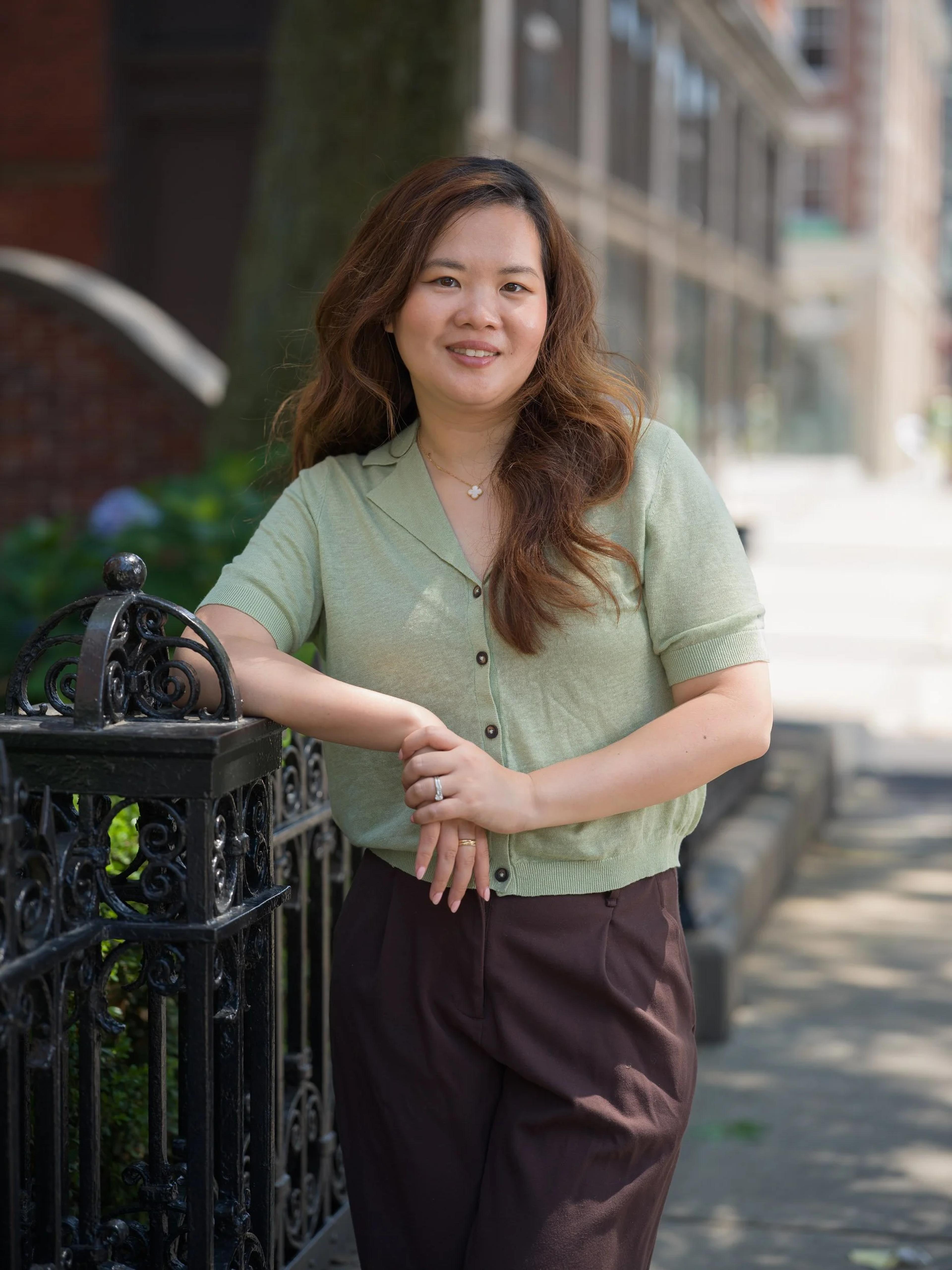
Dr. Caroline Fu, DO
Teens & Children
Harvard & Tufts Instructor of Psychiatry
Boston

Physician-led care for children and teens who are struggling to get to school or to keep up once there.

At Center Clinics, every patient sees a highly-trained physician comfortable providing psychotherapy and personalized medication management. We do not employ lower-level providers like nurse practitioners or clinical social workers.
When a child cannot get to school, or is there but falling behind, the cause is often something underneath: anxiety, depression, attention problems, social difficulties, a learning difference, or burnout. School refusal can build quickly, and every missed day can make the next one harder. Academic struggles in bright students are common and worth a closer look.
Our physicians evaluate the whole picture, including mood, attention, learning and what is happening at school and at home. Care can combine therapy, family guidance and medication when appropriate. With your permission, we coordinate with teachers, counselors and testing professionals so the plan is consistent.
School refusal rarely starts with a flat no. It often starts small and is easy to mistake for a stomach bug.
We talk with parents and spend time alone with your child or teen. We ask when the trouble began and what changed around then, such as a move, a loss, bullying or a harder class. Some children are avoiding something at school. Others are pulled toward home, often because they worry about a parent.
We check for separation anxiety, social anxiety, panic, depression, ADHD, sleep problems and self-harm. Your pediatrician can rule out medical causes of repeated stomach pain or headaches. With your permission, we can review school reports and talk with school staff. If a learning difference seems likely, we refer you to a neuropsychologist, a psychologist who tests thinking and learning. We do not do that testing ourselves.
The aim is a step-by-step return. Waiting until the fear is gone usually does not work, because going back is how the fear shrinks. If your child is being bullied or is not safe at school, that has to be addressed first. Expect setbacks, especially after holidays or illness.
Some students need a day program or an intensive outpatient program. We do not run these, but we can help you find one and coordinate with its team.
Parents often feel caught between pushing too hard and giving in. These habits can help.
Call us if your child has missed several days without a medical reason, if mornings have become a daily fight, or if a student who used to keep up has been falling behind for more than a few weeks. Call sooner if your child seems withdrawn or hopeless.
If your child talks about wanting to die or about self-harm, call or text 988 (the Suicide & Crisis Lifeline) or call 911. We are not an emergency service. With support, many children and teens do get back to school.
Find your doctor for school refusal and academic struggles →
Call our Boston office at (617) 401-8838 or our New York office at (917) 300-8998, or request an appointment online.